Buscar este blog

jueves, 13 de junio de 2024

Social Networks for Research Purposes

 In this second decade of the 21st century, social networks are all around us. If you don't have presence on these kind of networks, basically it seems you don't exist. Research is not a field opaque to this aspect. In this entry I will cover mainly this topic.


Probably the most common social networks that one can think of include Instagram, Whatsapp, Telegram, Facebook, X (former Twitter)... and some others. However, for the purpose of research, there are a few which are specifically thought for it. We have to start with ResearchGate, which indeed is built for researchers.  It offers many gadgets related with research. One can easily publish his/her articles, with lots of details on them (type of document, where is it published, co-authors...), contact other authors on the same field, answer open questions on topics of interest... and many other things you can explore.

As an example, you can have a look at my profile in ResearchGate via the QR (or the link before):

Apart from ResearchGate (which is quite specific), one can't forget about LinkedIn, which is more intended to any kind of professional duties, not just research, but it can serve to open our job to people not so specialized in the field. Finally, if we want to become even more open to general public, X is a good tool. However, have in mind that here we have to spread our message in an adapted way, such that anyone can understand what we have to say.


Personally speaking, I find all of these networks really useful in my own work. Many researchers on the field of HEP physics have profiles and shared works in them, and I can learn a lot from them as easy as clicking on several accessible links. Moreover, I can connect with them and exchange messages very easily with these networks. How old are the days when important physicists exchanged their thoughts via letters! And now, the e-mail era is also starting to be behind the wave! In my opinion, a 2.0 researcher must use all of these tools if he/she wants to be updated with whatever happens in his/her field of study instantaneously.


Another thing I want to mention also in this entry is the importance of having a Personal Learning Environment (PLE) which eases the task of having all the tools one can use handy. As an example, you can see below my Symbaloo PLE:

I can easily access any of the tools I want just by clicking on one of the bubbles you can see on it. You can also see how I organized by colors the different areas that these tools cover (white for document-building, pink for social networks, yellow for searching...).


Just to finish this entry, I want to go over the different tools I have on the PLE you are seeing. I find that all of them are basic for a researcher that wants to spread his/her work around the research world. We can start with tools like Google Apps, which makes the creation of documents something instinctive and easy to go, both on a individual and a collaborative way. Apps like Feedly are really useful to filter and organize the amount of news you can read related to your field of study. If used wisely, you can nearly build a personal newspaper with exactly the content you want to read. This is fundamental in content curation, to avoid the overexposure to news that reach us everyday. Another key aspect is having a personal/professional profile updated (and unified) such that anyone can reach you easily and to be well positioned in your field of study. For this, having unified profiles in ORCID, About.Me, or a personal blog is really helpful. Finally, if you want to be accessible in the net, as well as easily contact researchers of your interest, social networks like ResearchGate or LinkedIn are a must-to-have.

miércoles, 12 de junio de 2024

Social Software

In this new entry of the blog I want to share the importance of social networking in the research community nowadays. In the world we are living in, we have to take advantage of social software. This is a name that encapsulates many tools that we have to keep in touch with our colleagues almost instantaneously. Moreover, not only these tools help us to work in real time with our colleagues, but also to save large amounts of time. As you will see in the following examples, they allow us to do many things that in the old-school manner (sharing by email a document and receiving comments back for example) would have been far more time-consuming.


A leading provider of these kind of tools is Google, with its Google Apps service. Having just a free google account, it gives us many kinds of documents that we can write, edit, share and receive instantaneous comments from our collaborators; or even directly edition from them. This is really helpful when it comes to do collaborative work (research), both for the research work itself (for instance a spreadsheet) and for its presentation (ppt presentations).


To have some examples, you can see the following:

  • Document: You can see below (and in this link) a document that talks about the measurement of multivariate analysis performance, that has been written mainly by me but has also contributions from other colleagues.


  • Presentation: This tool is really helpful to present results that may have been produced by a group of collaborators. For example you can see below a presentation related with my field of study that could have been edited both by me and my colleagues.
  • Spreadsheet: Also Google provides the option of sharing spreadsheets like this one. In this example we have the grades of different students. If you have teaching duties as part of your work, and have to asses the grades of students together with some of your colleagues (because the teaching is shared for example), this can be useful.

  • Forms: Very useful tool to do polls and obtain some results from them. An example is shown here (sorry for the spanish :))

Obviously, it also these tools included in Google Drive also allow us to organize all our stuff. You can see an example of how I organized all the documents linked in this entry, as well as a specific folder where I saved some articles of interest for my work:


Personally, I use almost everyday these tools and the efficiency of my work has exponentially increased thanks to them. I am really happy to have these resources so handy, and I encourage you to incorporate them in your day by day research work.


martes, 11 de junio de 2024

Content Curation

 A fundamental aspect concerning the duties of a researcher that wants to be connected with whatever occurs in his/her field is to keep in touch with the news concerning his/her areas of research. However, it is very difficult to do so without being overwhelmed with the huge amount of news that surrounds us in this 2.0 world we live in. This is known as content curation.

To do so, there are a few of tools that can help us to cope with this overexposure proper of the 21st century. The first of them that I want to share with you is Feedly. In this website, one can build folders according to a certain topic, and include in them several sources related with the topic. Then, one will receive all the post from those sources time-ordered such that there will be no need to go into each of the pages separately to keep updated. For example, in my case I have built a folder related with HEP publications, as you can see in the screenshot below:


You can see on the left the folder named 'HEP Physics' and the sources attached below. Then in the center of the page, diverse news from those sources appear. Feedly is very helpful when it comes to saving time surfing the net for news related to our field os study.


The second tool I want to present in this entry is Diigo. Diigo is a tool that helps to create bookmarks to several specific documents, webpages... that one wants to have easily accessible. It allows also to create 'Outliners' which is a way to organize those bookmarks such that one don't just have a lot of bookmarks without them being organized. You can find my profile, where I have all the selected bookmarks in the screenshot below:


 As you can see above, I have saved several articles relate with top quark measurements. However, if I want to see specifically ATLAS t-channel measurements, I have a specific outliner for it (that you can see in the link or in the screenshot below):

 
I hope that all of these tools are helpful for your work!!


lunes, 10 de junio de 2024

Exploring the fundamental particles' zoo

The matter we know is composed of what is known as 'fundamental particles', described by the Standard Model of Physics. This extremely precise and almost perfect theory describes how these particles build everything that surrounds us, and the way they interact with each other.

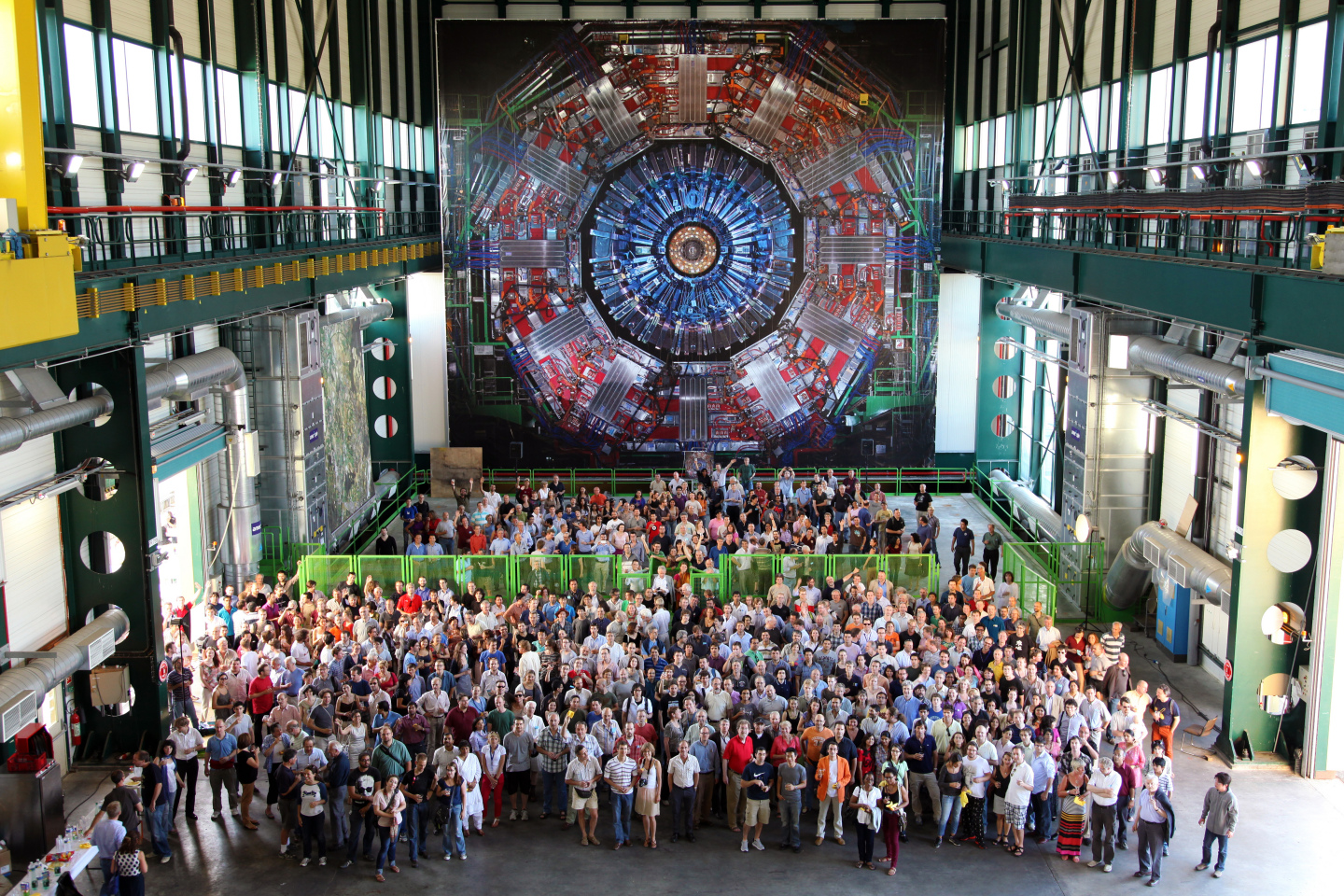
To explore the properties of this theory and its building blocks, at CERN's LHC in Geneve (Switzerland), several huge detectors are placed, collecting data from proton-proton and heavy ions collisions. These data serve then to thousands of physicist worldwide to analyze the predicted results from the theory. One of these huge detectors is the Compact Muon Sollenoid (CMS), where more than three thousand physicists and engineers work together to analyze the data and obtain powerful results. The following videos describe in bigger detail how does it work. I hope you enjoy them and learn interesting things about the detector :)


Collaboration | CMS Experiment 


I will keep updating this blog with related and useful information on experimental High Energy Physics (HEP). However, if you want to contact me to have further knowledge on the field, you can find me in the following places:

  • ORCID code: 0000-0002-1947-8157 


Personally speaking, I find blogs and social media a very important tool when trying to transfer research work into the community (both technical and less specialized too). As an example that serves as inspiration for my own work, you can see: